





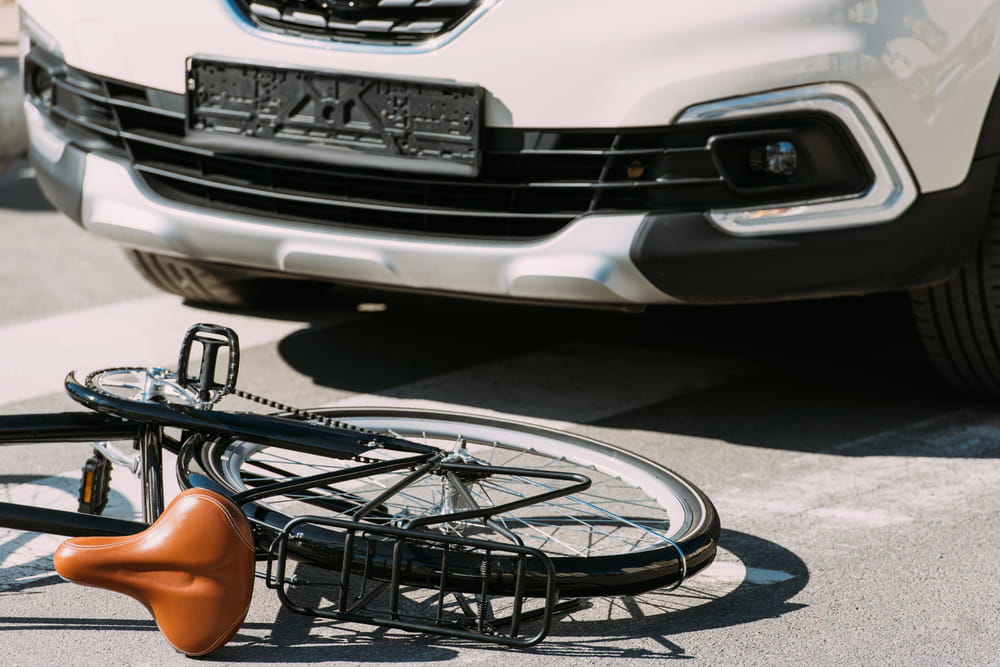
Were you injured in a bicycle accident in New Orleans?
At Kiefer & Kiefer, we have handled bicycle injury claims for riders across New Orleans and the surrounding parishes since 1982.
If a driver struck you while you were riding, an attorney can investigate the collision and pursue the compensation Louisiana law provides. Our New Orleans, LA bicycle accident lawyer has overturned at-fault findings by proving that a motorist violated the passing rules applicable to cyclists. We have represented injured Louisiana clients since 1982 and handle bicycle claims on a contingency fee. Contact us for a case review at no cost.
Bicycle Accident Lawyer New Orleans, LA
A bicycle accident lawyer represents riders injured by negligent drivers, defective roadway conditions, or dangerous property. Louisiana treats a bicycle as a vehicle with its own set of rules, and applying those rules correctly is frequently what decides liability.
NHTSA crash data recorded 1,166 pedalcyclist deaths nationwide in 2023, a 4 percent increase over the prior year, and 81 percent of those deaths occurred in urban areas. New Orleans fits that profile exactly. Narrow streets, heavy tourist traffic, streetcar tracks, and pavement that shifts underfoot all compound the risk for anyone riding here. The city has expanded its bike network considerably, but painted lanes sit inches from moving traffic on most of those corridors.
Types of Bicycle Accident Cases We Handle in New Orleans
Bicycle claims are not scaled-down car accident claims, and treating them that way costs riders money. Below are the situations our New Orleans bicycle accident attorneys handle most often.
- Unsafe passing collisions. Louisiana requires drivers to give riders clearance when overtaking. Many motorists, and some responding officers, do not know the requirement exists. Measuring the actual clearance from scene evidence has resolved cases in our clients’ favor.
- Right hook and left cross crashes. A driver turning across a bike lane or misjudging an oncoming rider’s speed causes some of the most severe injuries we see. Intersection geometry and sight lines matter enormously here.
- Dooring incidents. A parked motorist opening a door into the travel lane leaves a rider no time to react. Liability usually rests with the person who opened the door, not the cyclist. Insurers still try to argue the rider should have anticipated it.
- Car accidents. When a passenger vehicle strikes a rider, the same coverage questions arise as in any collision, including uninsured motorist benefits under the rider’s own auto policy.
- Truck accidents. Commercial vehicles have blind spots that swallow a bicycle whole. Federal record-keeping rules give us access to driver logs and inspection histories that ordinary claims never touch.
- Garbage truck accidents. Refuse vehicles stop constantly, reverse in traffic, and operate on residential streets where cyclists ride. Municipal and contractor liability both come into play.
- Roadway defect claims. Potholes, sunken utility cuts, and deteriorated pavement cause single-vehicle bicycle crashes with serious injuries. Claims against public entities follow different procedures and shorter notice requirements.
- Motor vehicle accidents. Collisions between a rider and any passenger vehicle raise the same questions of right of way, speed, and available coverage.
- Serious injuries. Riders sustain head trauma, spinal damage, and complex fractures at rates that vehicle occupants do not. These cases need life care planning, not just a medical bill total.
- Wrongful death claims. We recently represented the family of a cyclist killed when a motorist attempted to pass him. The officer found the rider at fault. We proved the driver had not given the required clearance and recovered all available insurance.
Bicycle Accident Infographic

Why Choose Kiefer & Kiefer as my Bicycle Accident Lawyer in New Orleans, LA?
We Know the Rules That Apply to Riders
Many lawyers approach a bicycle claim as though it were a car accident claim, and the results suffer for it. Special rules of the road govern cyclists, and drivers, insurers, and responding officers routinely misapply them. Megan Kiefer earned her law degree at Tulane in 2009 and holds training in mediation and negotiation from Humboldt University of Berlin. Martindale-Hubbell rates Chris Bruno AV for ethics and legal ability, and he sat on the bench for decades before returning to practice. He chaired a section of the New Orleans Bar Association and is Board Certified as a Civil Trial Advocate by the National Board of Trial Advocacy. That combination is what you want from a personal injury lawyer in New Orleans, LA when an insurer disputes who had the right of way.
Results and Fee Structure
Our firm has recovered millions of dollars for injured Louisiana clients. Representative outcomes include:
- $4.5 million for a client struck by a commercial vehicle at work
- $3.3 million jury verdict for an injury requiring neck surgery
- $2.2 million for a client struck by a company vehicle
- $1.2 million for a collision resulting in neck surgery
Bicycle accident claims are handled on a contingency fee, so no attorney fee is owed unless we recover compensation on your behalf.
Understanding Bicycle Accident Cases
Damages, Liability, and Compensation for Bicycle Accident Cases
Liability rests on Civil Code Article 2315, which obligates anyone whose fault causes damage to repair it. Proving that a driver breached a duty owed to a cyclist is the core of the case.
Recoverable damages include:
- Medical expenses from the emergency room through rehabilitation and future care
- Lost income and diminished earning capacity where the injury is permanent
- Pain and suffering, often the largest component in a serious injury claim
- Property damage, including the bicycle, helmet, and gear
- Loss of enjoyment, which matters when riding was central to how you lived
Comparative fault deserves particular attention in bicycle cases, because insurers lean on it hard. Article 2323 changed effective January 1, 2026. A rider found 51 percent or more at fault now recovers nothing. Below that line, the award is reduced by the assigned percentage. Incidents before January 1, 2026 remain under the previous pure comparative system.
What Are Important Aspects of a Bicycle Accident Case?
The police report is a starting point, not a verdict. Officers reconstruct these crashes quickly, often without measuring anything.
- Traversing an incorrect at-fault finding with scene measurements and witness accounts
- Preserving vehicle damage evidence and any nearby surveillance before it disappears
- Documenting head injuries properly, since brain injuries frequently present with normal imaging
- Identifying uninsured motorist coverage, which applies to cyclists more often than riders expect
- Establishing the driver’s clearance, speed, and attention through physical evidence rather than testimony alone
Helmet use comes up in nearly every one of these claims. Louisiana does not require adult riders to wear one, and the absence of a helmet does not defeat a claim. Expect the argument anyway, and expect it to be aimed at reducing the value of a head injury rather than at liability itself.
What Is The Bicycle Accident Case Timeline?
Timelines vary based on injury severity and whether the insurer disputes fault.
- Investigation and evidence preservation during the first weeks
- Medical treatment through to a stable prognosis
- Demand package submitted to the carrier with supporting proof
- Negotiation or mediation, where most claims resolve
- Suit, discovery, and trial when the offer does not reflect the harm
Louisiana now allows two years to file suit under Civil Code Article 3493.1 for injuries sustained on or after July 1, 2024. Earlier injuries fall under the prior one-year deadline.
What Should You Bring to Your Bicycle Accident Consultation?
- The crash report or report number, and any citation issued
- Photographs of the scene, the vehicle, your bicycle, and your injuries
- Medical records, imaging, and bills
- Your auto and homeowner policies, which may provide coverage
- Contact information for anyone who witnessed the collision
We’ll review the file, explain how liability looks on your facts, and give you a straight answer about whether the claim is worth pursuing. There’s no charge for that meeting.
Most Dangerous Locations for Bicycle Accidents in New Orleans
Streets and local roads:
- St. Charles Avenue: Streetcar tracks, frequent stops, and turning traffic alongside a heavily used riding route
- Esplanade Avenue: A primary bike corridor with intersections where drivers cross the bike lane
- Canal Street: High vehicle volume, transit traffic, and constant pedestrian movement
- Magazine Street: Narrow lanes with parked cars on both sides, creating dooring risk
- Rampart Street: Streetcar rails and lane shifts that catch narrow tires
Highways and major roads:
- Claiborne Avenue: Wide, fast, and carrying interstate overflow through neighborhoods
- Elysian Fields Avenue: A high-speed connector crossing multiple residential bike routes
- Earhart Boulevard: Limited bicycle accommodation with sustained vehicle speeds
- Chef Menteur Highway: Long stretches with minimal shoulder and heavy commercial traffic
Reach Out to Kiefer & Kiefer to Schedule a Consultation
If a driver hit you while you were riding, a New Orleans bicycle accident attorney at our firm can review the report, examine the physical evidence, and tell you whether the fault determination holds up. The consultation is free and we work on contingency, so you owe no attorney fee unless we recover. Contact us to get started.
Bicycle Accident Statistics in New Orleans
 National and statewide crash data show how often cyclists are killed or seriously hurt, and the figures shift from year to year. New Orleans riders share narrow streets with cars, delivery vans, rideshare vehicles, and streetcars, so many of the national risk factors apply directly to local commutes. Visibility at night, turning vehicles, and drivers who misjudge a cyclist’s speed appear again and again in crash data. These are some of the most recent figures.
- In 2024, 1,103 bicyclists were killed in U.S. traffic crashes, according to NHTSA bicycle data.
- Nearly three-quarters of bicyclist deaths occur in urban areas, based on the same NHTSA figures.
- NHTSA identifies failure to yield the right of way as the leading factor in fatal bicycle crashes, followed by bicyclists not being visible to drivers.
- Louisiana recorded 35 bicyclist deaths in 2023, down from 44 in 2022, according to the Louisiana Highway Safety Commission.
- The 2023 Louisiana total was still 33.6 percent above the state’s pre-pandemic five-year average.
A one-year decline is welcome, but it doesn’t mean the streets have become safe for riders. The 2023 total remained well above where Louisiana stood before 2020. For an injured cyclist, though, the statewide numbers matter less than the facts of one crash: who failed to yield, whether the driver was looking at a phone, and what the video and witnesses show. A New Orleans bicycle accident lawyer builds the claim around that evidence and addresses any gaps before the insurer raises them.
Mistakes That Can Damage Your Bicycle Accident Claim
Insurance companies look for reasons to reduce or deny bicycle claims, and many of those reasons come from decisions made in the first days after a crash. These are the mistakes we see most often.
- Leaving the scene without a police report. Many riders feel shaken but uninjured and agree to handle things privately with the driver. A police report records the driver’s identity, insurance information, and the officer’s observations while they are fresh. Without one, the driver’s account may be the only version the insurer considers.
- Repairing or throwing away the bicycle. The frame, wheels, and helmet can show the direction and force of the impact. Photograph everything, including your clothing and any lights or reflectors, and keep the damaged equipment until your lawyer has documented it.
- Delaying medical treatment. Concussions, fractures, and spinal cord injuries are not always obvious at the scene. When weeks pass between the crash and your first doctor visit, the insurer will argue that something else caused your symptoms.
- Giving a recorded statement to the driver’s insurer. Adjusters often ask whether you had lights, whether you were in a bike lane, and how fast you were riding. Short answers given while you are in pain can be taken out of context later. You may decline to give a recorded statement until you have spoken with a lawyer.
- Treating the police report as the final word on fault. An officer’s conclusion is not binding in a civil claim. Video footage, witness accounts, and crash reconstruction can show a different sequence of events than the report describes.
- Posting about the crash online. Photos from a later outing or comments about feeling better can be used to dispute the extent of your injuries. Insurers routinely review social media activity during a claim, so it’s safer to stay off social media until the case is resolved.
- Assuming there is no coverage after a hit-and-run. A hit-and-run driver may never be identified. Your own uninsured motorist coverage may still apply, even though you were riding a bicycle rather than driving.
- Overlooking commercial and rideshare policies. When the driver was working, additional coverage may be available. Crashes involving Uber drivers, Amazon delivery vans, and other delivery trucks often involve company policies with higher limits than a personal auto policy.
- Waiting too long to act. Surveillance video from nearby businesses can be recorded over quickly, and witnesses become harder to find. Louisiana also limits the time to file suit, so delay can cost you both evidence and legal rights.
- Underestimating future medical needs. Injuries to the knees, shoulders, and spine sometimes require surgery months after the crash. A signed release generally ends the claim, so the full course of care should be documented before any settlement is accepted.
New Orleans Bicycle Accident Lawyer FAQs
How much does it cost to hire a bicycle accident lawyer in New Orleans?
We handle bicycle accident cases on a contingency fee, and there are no up-front fees. Our fee comes from the recovery at the end of the case, so there are no attorney fees unless we recover compensation for you.
Is the first consultation free?
Yes. The first consultation is free and confidential. We review how the crash happened, the injuries you have been treated for, and any communication you’ve had with an insurance company. You’ll leave with a clear explanation of your options and the next steps.
How long do I have to file a bicycle accident claim in Louisiana?
For injuries sustained on or after July 1, 2024, Louisiana generally allows two years from the date of injury to file suit. Injuries before that date fell under a one-year limit. Claims against government agencies, such as a claim over a road defect, may involve additional requirements, so it is wise to have a lawyer review the deadline early.
Can I still recover if I wasn’t wearing a helmet?
Not wearing a helmet does not automatically bar a claim. The driver’s insurer may argue that a helmet would have reduced your injuries, and any share of fault assigned to you reduces the recovery. For crashes on or after January 1, 2026, a rider found 51 percent or more at fault cannot recover from the other party.
What if the police report says I caused the crash?
A police report is one piece of evidence, not a final ruling. Officers often arrive after the crash and rely on statements from the people involved, and the driver is usually the one who is uninjured and able to talk. Independent witnesses, nearby cameras, and damage patterns on the bicycle and vehicle can support a different conclusion.
Can I file a claim if I was hit by an opening car door?
Yes, in many cases. A driver or passenger who opens a door into a cyclist’s path may be responsible for the resulting injuries. These claims are sometimes complicated when the vehicle was parked, because the at-fault person may not be the owner. We identify the person who opened the door and the insurance policy that applies.
What compensation can I recover after a bicycle crash?
Recoverable damages may include medical bills, future treatment, lost wages, reduced earning capacity, pain and suffering, and the cost to repair or replace your bicycle and gear. When a crash causes permanent harm, such as paralysis, the claim should account for lifetime care needs. The value depends on the injury, the treatment, and the available coverage.
What happens if a cyclist is killed in a crash?
Certain family members may bring a wrongful death claim for their own losses, along with a survival claim for the harm the rider suffered before death. Louisiana law sets the order of who may file, beginning with the spouse and children.
How long will my bicycle accident case take?
Many claims take several months, and cases with serious injuries can take a year or more. Settling before your doctors can describe the treatment you will still need can leave future medical costs unpaid.
Will my case go to trial?
Most bicycle accident claims in New Orleans resolve through settlement. We still prepare each case with the possibility of trial in mind. If the insurer does not make a fair offer, we will discuss filing suit with you.
Important Resources for New Orleans Bicycle Accident Cases
What Are Important Louisiana Legal Resources for Bicycle Accident Cases?
Louisiana publishes its injury laws online through the state legislature. These sources explain the basic rules on filing deadlines, fault, and damages that apply to bicycle crashes.
- The Louisiana State Legislature hosts a searchable database of the Civil Code and Revised Statutes.
- Civil Code Article 2315 sets the general rule that a person whose fault causes damage must repair it.
- Civil Code Article 2323 explains how fault is shared, including a 51 percent bar for incidents on or after January 1, 2026.
- Civil Code Article 3493.1 sets a two-year filing period for injuries sustained on or after July 1, 2024.
What Are Important Local Resources for New Orleans Bicycle Accident Cases?
The agencies and organizations below can help after a bicycle crash, whether you need a report, medical care, or a way to flag a street hazard.
- New Orleans Police Department: (504) 821-2222 for non-emergency calls and reports.
- University Medical Center New Orleans: (504) 702-3000, located at 2000 Canal Street.
- NOLA 311: dial 311 or (504) 539-3266 for city service requests.
- Bike Easy: (504) 861-4022, a nonprofit focused on safer bicycling in Greater New Orleans.
Kiefer & Kiefer is not affiliated with and does not endorse any of the organizations listed above. This information is provided for convenience only.
About Kiefer & Kiefer
Kiefer & Kiefer was founded by the late Senator Nat G. Kiefer, Sr., and our attorneys represent injured Louisianans from our office at 1100 Poydras Street in downtown New Orleans. Nat G. Kiefer, Jr. has tried more than 200 cases, has mediated more than 700 personal injury cases since 1987, and has taught trial advocacy at both Tulane and Loyola law schools. Megan Kiefer has been selected to Super Lawyers every year from 2022 through 2025, and her results include a $2.5 million settlement for a client with neck and back injuries from a motor vehicle crash.
What Our Clients Say
★★★★★
This law firm is EXCEPTIONAL! If you need some one who will truly fight for you, look no further. This is the Law Firm to hire! Knowledgeable, compassionate, and incredibly skilled. I’m beyond satisfied with the results of my son’s case! Thanks Megan Kiefer, and the entire team at Kiefer & Kiefer who assisted with my case!!
Anunka L.
Read more reviews on our Google Business Profile.
Additional Resources for New Orleans Bicycle Accident Cases
- Who Is At Fault In A Bicycle Wreck?
- Can You Sue For A Bicycle Accident Caused By Poor Road Conditions
- Is there insurance coverage if I am injured in a New Orleans bicycle accident?
- How a New Orleans bicycle accident attorney can help you following a bicycle accident
Contact Kiefer & Kiefer
If you were hurt while riding in New Orleans, a bicycle accident attorney at Kiefer & Kiefer can review the crash report, preserve the evidence, and deal with the insurance companies while you recover. We handle these cases on a contingency fee, with no up-front fees. During a free, confidential consultation, we’ll listen to what happened, review your records, and explain your options. We give clients our cell phone numbers so they can reach us with questions as the case moves forward. Contact us to schedule your consultation.

Free Consultation
Client Review
"Megan and her team are the absolute best. They are patient, professional and thorough. I have no doubt that my getting back to myself after the car accident was their priority. Megan encouraged me to stay the course, work through my treatments, trust my doctors and let her handle the rest. That’s exactly what I did and she DID NOT let me down. I, without a doubt would refer her to my family and friends."
Kelly Ellis