





Were you or a loved one harmed by medical negligence in New Orleans, LA?
At Kiefer & Kiefer, we handle Louisiana medical malpractice claims with attention to the medical review panel process and the specific procedural requirements these cases involve.
If you have been injured or have lost a loved one because of medical negligence, an attorney can help you pursue a claim against the responsible healthcare provider under Louisiana law. Medical malpractice cases follow a distinct procedural path that includes a medical review panel before a lawsuit can be filed against most healthcare providers. Louisiana filing deadlines are shorter than for other personal injury claims, and gathering medical records early is essential.
Our New Orleans, LA medical malpractice lawyer has represented injured people throughout Louisiana for more than four decades. Contact our office to schedule a free consultation.
Medical Malpractice Lawyer New Orleans, LA
A medical malpractice lawyer represents patients and their families when a healthcare provider’s negligence causes injury, disability, or death. Common examples include misdiagnosis, delayed diagnosis, surgical errors, medication errors, birth injuries, hospital-acquired infections, and failures to obtain informed consent.
Louisiana medical malpractice cases are subject to specific procedural requirements that do not apply in a standard personal injury case. Claims against qualified healthcare providers must be submitted to a medical review panel before a lawsuit can be filed, and different prescription periods and damages rules apply. The strength of the case often depends on how thoroughly the medical record is reviewed at the outset.

Types of Medical Malpractice Cases We Handle in New Orleans
Medical malpractice claims in New Orleans arise from many kinds of clinical mistakes and system failures across hospitals, clinics, and provider offices. The type of error, the setting where it occurred, and the specific harm to the patient shape the case and the parties who may be liable. Our firm handles medical malpractice matters arising from the situations below.
- Misdiagnosis and delayed diagnosis. A failure to recognize cancer, heart attack, stroke, or infection can allow a treatable condition to progress to a life-threatening or fatal stage. Reviewing physicians and treating specialists help establish the standard of care.
- Surgical errors. Wrong-site surgery, retained instruments, and technical errors during a procedure can cause significant harm. Operative reports, hospital records, and the recollections of the surgical team are central evidence.
- Medication errors. Wrong drug, wrong dose, dangerous drug interactions, and pharmacy errors can cause serious injury or death, particularly for older patients and those with complex medication regimens.
- Birth injuries. Failure to monitor fetal distress, delays in ordering a cesarean, and improper delivery techniques can cause conditions including cerebral palsy, brachial plexus injury, and hypoxic brain injury.
- Failure to obtain informed consent. A patient must be informed of the material risks of a procedure before consenting to it, and inadequate disclosure can support a claim independently of any technical error.
- Anesthesia errors. Anesthesia complications from dosing errors, monitoring failures, or airway management issues can cause brain injury, cardiac arrest, or death.
- Paralysis. Surgical mistakes and delays in diagnosing spinal injuries can result in paraplegia or quadriplegia. These cases require lifetime care planning.
- Spinal cord injuries. Spinal cord damage from surgical error, missed diagnosis, or delayed treatment can cause permanent disability.
- Serious injuries. Medical negligence can leave a patient with severe or permanent injury requiring lifelong care and support.
- Wrongful death. When medical negligence causes a patient’s death, Louisiana law allows specific family members to bring a wrongful death action.
Why Choose Kiefer & Kiefer as My Medical Malpractice Lawyer in New Orleans, LA?
Kiefer & Kiefer has represented injured people across Louisiana for over four decades and has recovered millions of dollars for clients in serious injury and wrongful death cases. Medical malpractice claims in Louisiana involve procedural steps that do not apply in a standard personal injury case, including the medical review panel process. Our attorneys work with specialists in medicine and life-care planning to develop the medical proof these cases require.
Judicial Background and Procedural Depth
Chris Bruno spent decades on the bench as a judge before returning to plaintiff-side practice, and that experience with procedural depth is directly relevant to medical malpractice cases, which require careful navigation of the medical review panel process. He is Board Certified as a Civil Trial Advocate by the National Board of Trial Advocacy and holds the highest Martindale-Hubbell rating for legal ability and ethics. Chris is a member of the Louisiana District Judges Association, the Louisiana Bar Foundation Education Committee, and the Supreme Court of Louisiana Pro Se Litigation Task Force. He earned his Juris Doctor from Tulane Law School. Our work as a personal injury lawyer in New Orleans, LA includes representing patients and families in medical malpractice matters throughout Orleans Parish.
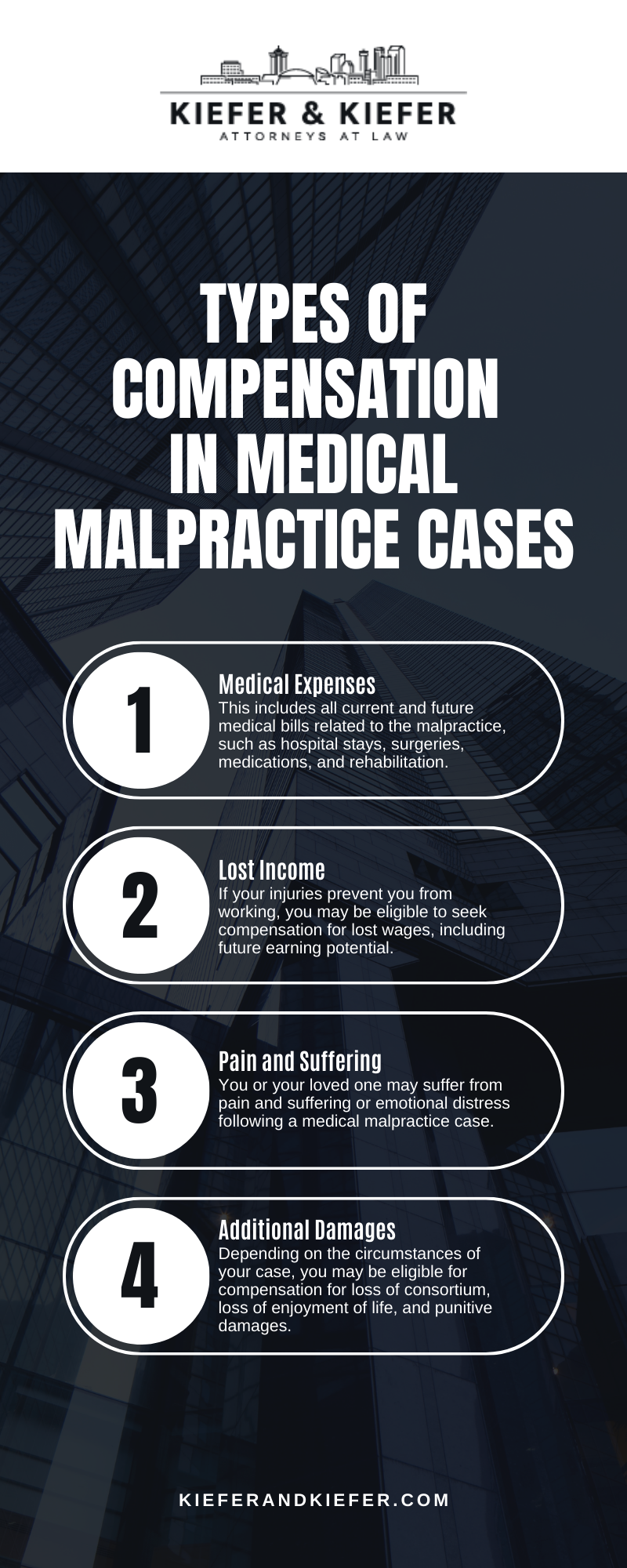
New Orleans Medical Malpractice Infographic
What Is Important to Understand About a Medical Malpractice Case?
Damages, Liability, and Compensation for Medical Malpractice Cases
Louisiana medical malpractice cases involve specific damages rules that differ from other personal injury claims. Recovery from qualified healthcare providers is subject to statutory limits on general damages, though future medical care is not capped in the same way. Recovery categories can include:
- Past and future medical care, including future rehabilitation, surgeries, therapies, and specialized equipment.
- Lost wages during recovery and reduced earning capacity when the injury limits future work.
- General damages for pain, suffering, physical impairment, and loss of enjoyment.
- Loss of consortium or wrongful death damages recognized under Louisiana law when applicable.
The Louisiana Medical Malpractice Act sets a cap on the total amount recoverable from a qualified healthcare provider, and understanding how the cap applies is central to case planning. The types of damages available depend on the harm, the provider’s qualified status, and applicable coverage.
What Are Important Aspects of a Medical Malpractice Case?
Medical malpractice cases depend on the medical record, physician review, and the applicable standard of care. Reviewing the record early helps determine whether the case meets the legal threshold to proceed. Several issues distinguish these cases:
- Claims against qualified healthcare providers must generally be submitted to a medical review panel before a lawsuit can be filed.
- Prescription for medical malpractice claims is different from other personal injury actions and runs from the date of the alleged act or the date of discovery.
- Standard of care testimony from a medical specialist in the same field is central to establishing negligence.
- The Louisiana Medical Malpractice Act limits recovery from qualified healthcare providers to a specific total amount.
- What you post on social media can be used to challenge the extent of the injury, so caution matters.
Preserving records early supports the causation and damage elements of the claim. Insurance carriers and defense teams often argue that adverse outcomes were unrelated to the alleged breach, and complete records help address that argument.
What Is the Medical Malpractice Case Timeline?
Medical malpractice case timelines are shaped by the medical review panel process, the complexity of the medical issues, and the number of providers involved. The panel review can take many months, and the resulting opinion affects settlement dynamics but is not binding on the parties. Most matters follow this general path:
- Initial review of the medical record and consultation with a reviewing physician.
- Filing a request for a medical review panel with the Louisiana Division of Administration for qualified providers.
- Formation of the panel and submission of medical evidence.
- Panel opinion, followed by settlement discussions or filing suit in state court.
- Discovery, depositions, and preparation for trial.
- Settlement negotiations, mediation, or trial before a jury.
Medical malpractice prescription periods are shorter than for other personal injury actions, and delay can jeopardize the claim.
What Should You Bring to Your Medical Malpractice Consultation?
An initial consultation is more useful with certain medical records available, though nothing is required to schedule the meeting. If available, please bring:
- Medical records for the treatment or procedure at issue, including operative reports and hospital records.
- Names of all healthcare providers involved in the care.
- Test results, imaging studies, and pathology reports.
- Insurance information and any correspondence with the healthcare providers or their insurers.
- A chronological narrative of the medical care leading up to and following the alleged malpractice.
- Contact information for family members or friends who witnessed the care or its effects.
The consultation is free and provides an opportunity to review the medical events, discuss whether the case meets the criteria to proceed, and understand the Louisiana framework.
What Are Important Louisiana Legal Resources for Medical Malpractice Cases?
Louisiana medical malpractice claims are subject to specific statutory rules that differ from other personal injury actions. The materials below are the authoritative starting points for anyone reviewing the framework directly.
- Medical malpractice claims are subject to a specific prescription rule under La. R.S. 9:5628, which sets a one-year period from the alleged act or discovery, with an outside three-year limit.
- The Louisiana Medical Malpractice Act framework, including definitions of health care providers subject to the Act, is set out at La. R.S. 40:1231.1.
- Statutory limits on the recoverable amount from qualified healthcare providers are established by La. R.S. 40:1231.2, which also excludes future medical care from the general cap.
- The general Louisiana negligence framework applies to claims against non-qualified providers and is codified at La. C.C. Art. 2315.
Reach Out to Kiefer & Kiefer to Schedule a Consultation
If you or a loved one has been harmed by medical negligence, we can help you understand the medical malpractice process under Louisiana law. Our firm accepts these matters on a contingency fee, meaning no attorney fees are owed unless we obtain a recovery for you. Contact us to schedule a free consultation with our New Orleans medical malpractice attorney.

Free Consultation
Client Review
"Megan and her team are the absolute best. They are patient, professional and thorough. I have no doubt that my getting back to myself after the car accident was their priority. Megan encouraged me to stay the course, work through my treatments, trust my doctors and let her handle the rest. That’s exactly what I did and she DID NOT let me down. I, without a doubt would refer her to my family and friends."
Kelly Ellis