

Metairie Flood Claims Lawyer
Contact our office for a free, confidential case review with a Metairie, LA flood claims lawyer.
If your property in Metairie has been damaged by flooding and your insurance company is not paying what your policy requires, an attorney who handles these disputes can help you hold the carrier accountable. A Metairie, LA flood claims lawyer at Kiefer & Kiefer can review your policy, assess the insurer’s response, and pursue the benefits you are owed under Louisiana law.
Our firm has over 40 years of experience representing policyholders in hurricane and insurance claims throughout Jefferson Parish and southeastern Louisiana. We handle these cases on a contingency fee basis, so you pay nothing unless we recover for you.
Flood Claims Lawyer Metairie, LA
Metairie sits in Jefferson Parish just west of New Orleans, and much of the area lies at or below sea level. The combination of heavy rainfall, aging drainage infrastructure, and proximity to Lake Pontchartrain makes Metairie vulnerable to flooding even outside of hurricane season. Residents have dealt with repeated flood events over the past two decades, and after each one, many find themselves in disputes with their insurance carriers over the scope of coverage and the amount owed.
A flood claim is fundamentally an insurance dispute. The question is whether the carrier is honoring the terms of the policy. That analysis depends on the type of coverage in place, the cause of the water damage, and whether the insurer followed Louisiana’s statutory obligations when adjusting the claim. Some flood claims involve a single policy and a clear coverage determination. Others involve multiple carriers, contested damage assessments, and adjusters who drag out the process.
Types of Flood Claims Cases We Handle in Metairie
Flood damage disputes take different forms depending on the property, the policy, and the insurer’s conduct. Our attorneys handle flood claims in Metairie, LA involving the following.
- Homeowner insurance claims. Most homeowner policies in Louisiana exclude flood damage, but they may cover water intrusion caused by wind-driven rain or damage to the roof that allows water inside. The dispute often comes down to whether the water entered from above or from below, and that distinction determines which policy responds.
- Hurricane and storm damage. Major storms cause damage from multiple sources simultaneously. Wind strips roofing materials, rain enters the structure, and rising water floods the ground floor. Insurers sometimes attribute the majority of the damage to the peril with the lowest available coverage. We retain independent adjusters and engineers to separate the causes and match each to the correct policy.
- Vehicle flood damage. Metairie’s low elevation means that streets and parking lots can flood during severe rain events, sometimes within minutes. If your vehicle was damaged by floodwater, the claim typically falls under the comprehensive portion of your auto policy. Disputes can arise over whether the vehicle is a total loss or repairable, and over the valuation the insurer assigns.
- Wind versus water disputes. This is one of the most contested issues in post-storm insurance claims. Homeowner policies generally cover wind damage, while flood damage requires a separate flood policy through the National Flood Insurance Program or a private insurer. When both wind and water caused damage to the same property, carriers on both sides may point to the other peril to avoid paying. Independent engineering assessments are often the only way to resolve the dispute.
- Underpayment and low estimates. An insurer may acknowledge coverage but issue a check that does not come close to covering the actual cost of repairs. This happens when the carrier’s adjuster uses outdated pricing, underestimates the scope of damage, or applies depreciation in ways the policy does not support. We compare the insurer’s estimate against independent contractor assessments and submit supplemental demands for the difference.
- Denied flood claims. A denial letter is not necessarily the end of the process. Insurers deny claims for reasons that do not always withstand scrutiny under the policy language or Louisiana law. Common bases include allegations of preexisting damage, late notice, or failure to submit a compliant proof of loss. We evaluate whether the denial is supportable and advise on the options for challenging it.
- Bad faith insurance conduct. Louisiana law requires insurers to initiate loss adjustment within 14 days of notice and to pay covered amounts within 30 days of receiving satisfactory proof of loss. When a carrier’s failure to pay is arbitrary, capricious, or without probable cause, the policyholder may be entitled to penalties of up to 50% of the amount due, proven economic damages, and attorney fees. For catastrophic losses like hurricane damage, the law now requires policyholders to provide a 60-day written cure period notice before filing a bad faith lawsuit.
- Commercial property flood claims. Businesses in Metairie that sustained flood damage may have claims under commercial property policies, business interruption coverage, or both. The damages in commercial cases extend beyond physical repairs to include lost revenue, displacement costs, spoiled inventory, and the cost of temporary relocation. Documenting business losses after a flood event requires financial records and, in some cases, forensic accounting.
Why Choose Kiefer & Kiefer as My Flood Claims Lawyer in Metairie, LA?
Insurance Dispute Experience Across Jefferson Parish
Kiefer & Kiefer has represented homeowners and businesses in flood damage disputes throughout Jefferson Parish, including claims arising from Hurricane Ida and other storms that have impacted the Metairie area. We understand how carriers operating in this market evaluate flood claims, and we know what it takes to challenge an underpayment or denial when the insurer’s position does not hold up under the policy or the law. The firm has recovered millions of dollars for policyholders whose claims were underpaid, delayed, or wrongfully denied.
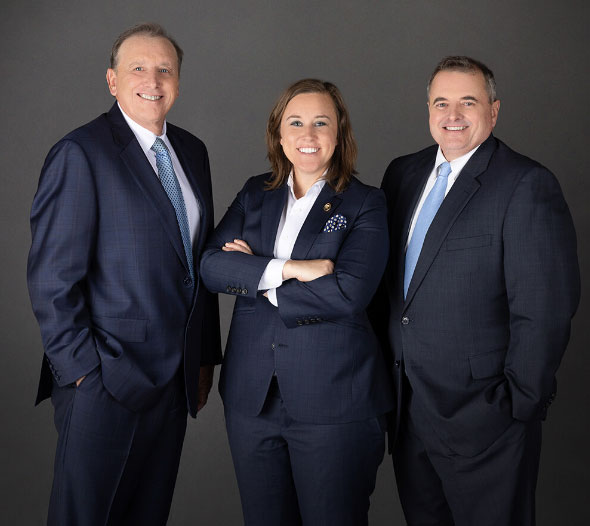
At Kiefer & Kiefer, the firm’s insurance claims work is handled by partners with decades of trial and negotiation experience. Megan Kiefer earned her J.D. from Tulane University Law School where she graduated with Order of the Coif distinction and served as Senior Associate Editor of the Tulane Law Review. She is a Super Lawyers honoree, a Multi-Million Dollar Advocates Forum inductee, and has completed advanced mediation and negotiation training at Humboldt University of Berlin.
Nat Kiefer Jr. has practiced law in Louisiana since 1982. He graduated from Tulane University Law School with honors, received the Walter Sutton Award, and was inducted into the Order of the Coif. He has handled insurance disputes and property damage claims across the state for over four decades. Chris Short graduated magna cum laude from Tulane University Law School and is licensed in Louisiana and Florida. He holds a degree from California State University Maritime Academy.
Kiefer & Kiefer also serves as a personal injury lawyer in Metairie, LA and takes flood and insurance claims on a contingency basis. You owe nothing unless we recover for you.
What Is Important to Understand About a Flood Claims Case?
Recovery, Policyholder Rights, and Bad Faith Penalties
Louisiana law imposes specific obligations on insurance companies when they receive a claim. Under Civil Code Article 2315, a person or entity that causes damage through fault is obligated to repair it, and that principle applies to insurers whose bad faith handling of a claim causes financial harm to policyholders. Carriers must adjust claims fairly and promptly, and when they fail to do so, the consequences can include penalties, economic damages, and attorney fees.
What you can recover in a flood claim depends on the type of policy, the coverage limits, and whether the insurer acted in bad faith. The baseline recovery is the amount owed under the policy for the covered damage. If the insurer’s failure to pay was arbitrary or without justification, Louisiana law authorizes penalties of up to 50% of the amount due. Attorney fees are also recoverable in successful bad faith claims, which means the cost of hiring a lawyer does not come out of your recovery.
What Are Important Aspects of a Flood Claims Case?
The most important thing to understand about a flood claim is that the insurer’s first offer is not necessarily the final number.
- Adjusters work for the insurance company. Their job is to evaluate the damage and calculate a payment amount, but their assessment is not binding. If you believe the estimate is too low, you have the right to challenge it with independent evidence. That means hiring your own adjuster, obtaining contractor estimates, and, when the cause of the damage is disputed, retaining an engineer to assess whether the loss was caused by wind, water, or both.
- Documentation from the beginning of the process is critical. Photograph and video the damage before any cleanup or temporary repairs. Keep every receipt. Save all written communications with the insurer. If you prepare before hurricane season, including documenting the condition of your property in advance, that baseline evidence can strengthen your position significantly if a claim becomes disputed.
- Louisiana’s comparative fault law under Civil Code Article 2323 applies to tort claims, including bad faith claims. And the prescriptive period for filing a bad faith lawsuit is governed by Civil Code Article 3493.1, which provides a two-year window for delictual actions arising after July 1, 2024. But the deadlines for submitting a proof of loss under a flood insurance policy can be much shorter, and missing them can affect your ability to recover.
What Is the Flood Claims Case Timeline?
The process for filing a claim after a hurricane or major flood event can feel overwhelming, particularly when the insurer is not cooperating. We handle the dispute from start to finish so you can focus on repairing your property and getting your life back to normal.
- After you report a loss to your insurer, the carrier is required to begin adjusting the claim within 14 days. For catastrophic losses, that window extends to 30 days. Once the adjuster inspects the property, the insurer must issue a coverage determination and, if the claim is covered, make payment within the statutory timeframe.
- If the payment is inadequate or the claim is denied, we step in to review the insurer’s position, retain independent professionals to assess the damage, and submit a supplemental demand or challenge the denial.
- For catastrophic losses, Louisiana law now requires policyholders to issue a 60-day cure period notice before filing a bad faith lawsuit, giving the carrier one final opportunity to resolve the dispute without litigation. If the carrier does not respond appropriately within that window, we file suit.
What Should You Bring to Your Flood Claims Consultation?
The following materials will help us evaluate your claim and advise you on the best course of action:
- Your insurance policy, including any endorsements, riders, or amendments
- The insurer’s written coverage determination, denial letter, or payment summary
- The adjuster’s damage estimate or inspection report
- Photographs and video of the property damage, taken as soon after the event as possible
- Receipts for temporary repairs, relocation costs, or other out-of-pocket expenses
- All written correspondence with the insurer, including emails and letters
If you do not have all of these materials, we can still begin reviewing your case. Many policyholders contact us while the claims process is still underway, and we can step in at any stage to protect your interests and ensure the insurer is meeting its obligations.
What Are Important Louisiana Legal Resources for Flood Claims Cases?
Flood claims in Louisiana involve a combination of state insurance law, federal flood insurance regulations, and general tort principles. The resources below can help you research the legal framework that applies to your case.
- FEMA National Flood Insurance Program: Administers the federal flood insurance program and provides information on policy terms, coverage limits, and claims process.
- Louisiana Department of Insurance: Regulates carriers in the state and accepts complaints from policyholders who believe their claims have been mishandled.
- Civil Code Article 2315: Louisiana’s foundational negligence and damages provisions.
- Civil Code Article 3493.1: The prescriptive period for filing a bad faith lawsuit provides two years from the date of injury for claims arising after July 1, 2024.
Reach Out to Kiefer & Kiefer to Schedule a Consultation
If your flood claim in Metairie has been denied, delayed, or underpaid, Kiefer & Kiefer can review your policy and the insurer’s conduct and advise you on how to move forward. We handle these cases on a contingency basis, so you pay nothing upfront and owe no attorney fees unless we recover compensation on your behalf. Contact us to schedule a free consultation.
Free Consultation
Client Review
"Megan and her team are the absolute best. They are patient, professional and thorough. I have no doubt that my getting back to myself after the car accident was their priority. Megan encouraged me to stay the course, work through my treatments, trust my doctors and let her handle the rest. That’s exactly what I did and she DID NOT let me down. I, without a doubt would refer her to my family and friends."
Kelly Ellis