


Slidell Truck Accident Lawyer
Plaintiff-focused truck accident lawyers preparing every case with experience and dedication.
If you have been injured in a collision with a commercial truck in Slidell, the legal process for pursuing compensation is more complex than a standard vehicle accident claim. A Slidell, LA truck accident lawyer at Kiefer & Kiefer can investigate the crash, identify the responsible parties, and pursue a recovery that accounts for the full extent of your injuries.
Our firm has over 40 years of experience handling truck and 18-wheeler accident cases. Our attorneys previously defended insurance companies in commercial truck claims, and we now apply that knowledge exclusively for injured clients. We handle every truck accident case on a contingency fee basis, so you pay nothing unless we recover compensation for you.
Truck Accident Lawyer Slidell, LA
Slidell sits at the junction of I-10 and I-12 in St. Tammany Parish, making it one of the higher-traffic corridors for commercial trucks in southeastern Louisiana. I-10 carries freight between Baton Rouge and the Mississippi Gulf Coast, while I-12 connects the north shore to the interstate system heading west. That volume of commercial traffic means truck accidents in and around Slidell are not uncommon.
A truck accident case involves a collision with a vehicle that has a gross vehicle weight rating exceeding 10,000 pounds, as defined by the Federal Motor Carrier Safety Administration. Tractor-trailers, tankers, flatbeds, and box trucks all fall into this category. The size and weight of these vehicles produce more severe injuries than standard collisions, and the regulatory requirements governing their operation create additional avenues for establishing fault.
Types of Truck Accident Cases We Handle in Slidell
The cause and circumstances of a truck accident determine how the investigation unfolds and which parties may be liable. Our attorneys handle truck accident claims in Slidell, LA involving the following.
- 18-wheeler accidents. A loaded 18-wheeler can weigh up to 80,000 pounds. Collisions at highway speed along I-10 or I-12 involving vehicles this size frequently result in catastrophic or fatal injuries. We investigate driver logs, electronic data, and carrier compliance history in every semi-truck case.
- Rear-end collisions. Commercial trucks require substantially more stopping distance than passenger vehicles. When a truck driver is fatigued, distracted, or following too closely, the resulting rear-end collision can cause severe spinal, neck, and brain injuries.
- Jackknife accidents. A jackknife occurs when the trailer swings outward and folds against the cab. Sudden braking, wet roads, and improper load distribution are the most common causes, and these crashes often block multiple lanes of traffic and involve several vehicles.
- Tire blowout accidents. A tire failure at highway speed can cause a truck driver to lose control of the vehicle. Blowouts may result from underinflation, overloading, or deferred maintenance. When the failure traces back to the carrier’s inspection practices, the trucking company may bear liability.
- Hazardous materials accidents. Trucks transporting chemicals, fuel, or industrial materials along I-10 through Slidell are subject to additional federal regulations. When a hazmat truck is involved in a crash, the risk of fire, explosion, or toxic exposure adds layers of complexity to both the investigation and the damages.
- Delivery truck accidents. Local and regional delivery vehicles operate throughout Slidell’s residential and commercial areas. Liability depends on whether the driver is an employee or an independent contractor and on the relationship between the driver and the company they serve.
- Runaway truck accidents. Brake failure on loaded commercial trucks can result in uncontrolled descents, intersection overruns, and high-speed collisions. These cases often involve questions about whether the braking system was properly maintained and whether the driver received adequate training on brake management.
Why Choose Kiefer & Kiefer as My Truck Accident Lawyer in Slidell, LA?
Attorneys With Direct Insight Into Insurance Defense Strategies
Kiefer & Kiefer’s attorneys previously worked for insurance companies defending commercial truck and 18-wheeler claims. That experience gave us a direct understanding of how carriers evaluate trucking cases, how defense counsel builds arguments to reduce liability, and what adjusters look for when assessing the value of a claim. We now use that knowledge for the people on the other side of those disputes, and it has produced multiple seven-figure results in big rig and commercial vehicle cases.
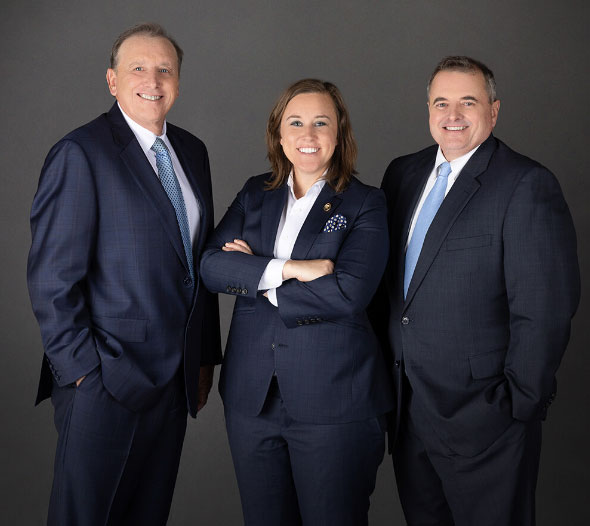
Megan Kiefer is a partner at the firm who has been named to the Top 10 Personal Injury Attorneys list in Louisiana. She graduated from Tulane University Law School with Order of the Coif distinction, is a Super Lawyers honoree, and was inducted into the Multi-Million Dollar Advocates Forum. She is licensed in Louisiana and California.
Nat Kiefer Jr. graduated from Tulane University Law School in 1982 with honors and received the Walter Sutton Award. He has practiced personal injury law in Louisiana for over four decades and has handled commercial vehicle accident cases throughout the state. Chris Short graduated magna cum laude from Tulane University Law School and is licensed in Louisiana and Florida. His background includes a degree from California State University Maritime Academy.
Kiefer & Kiefer has recovered millions of dollars for clients injured in truck accidents and other commercial vehicle collisions. We handle every trucking case on a contingency basis. There are no upfront costs, and you owe nothing unless we recover compensation on your behalf. We also serve as a personal injury lawyer in Slidell, LA and can advise you on any related claims arising from the same accident.
What Is Important to Understand About a Truck Accident Case?
Damages, Liability, and Compensation for Truck Accident Cases
According to NHTSA crash data, over 5,400 people were killed and more than 153,000 were injured in large truck crashes across the United States in 2023. The occupants of passenger vehicles bear the vast majority of those injuries and fatalities, a reflection of the physics involved when a fully loaded truck collides with a car or SUV. Under Louisiana Civil Code Article 2315, a person who causes damage through fault is obligated to repair it. In truck accident cases, liability frequently extends beyond the driver to include the trucking company, the vehicle owner, the cargo loader, and the maintenance provider.
Economic damages include:
- Medical bills
- Future treatment costs
- Lost income
- Diminished earning capacity
Non-economic damages cover:
- Pain and suffering
- Mental anguish
- Loss of enjoyment of life
- When the truck driver was intoxicated, Louisiana law may permit enhanced damages
Understanding how insurance applies after a truck collision is important because commercial trucks carry higher policy limits than passenger vehicles, and multiple policies may cover a single accident depending on the ownership and leasing arrangements.
What Are Important Aspects of a Truck Accident Case?
Truck accident claims involve regulatory and evidentiary issues that standard vehicle accident cases do not.
- Federal law requires trucking companies to maintain records on driver qualifications, hours of service, drug and alcohol testing, and vehicle inspections. When those records reveal violations, they become direct evidence of negligence.
- Negligent hiring and supervision by the carrier is a frequent basis for corporate liability. If the trucking company hired a driver with a poor safety record, failed to conduct required drug testing, or pressured the driver to exceed hours-of-service limits, the company itself can be held responsible for the crash.
- Louisiana’s comparative fault law under Civil Code Article 2323 applies to truck accident claims. Since January 1, 2026, a claimant assigned 51% or more of the fault is barred from recovering damages.
- Defense teams in trucking cases invest heavily in shifting blame to the injured driver, and countering those arguments with solid evidence from the outset is essential.
What Is the Truck Accident Case Timeline?
Truck accident cases move through a recognizable sequence, but the pace varies based on the severity of the injuries and the complexity of the liability picture.
- We begin with an immediate investigation. Electronic data from the truck’s engine control module and electronic logging device must be preserved quickly because carriers are not required to retain this data indefinitely.
- We also secure surveillance footage, obtain the driver’s qualification file, and arrange an independent vehicle inspection when possible.
- Medical treatment continues during this period, and we coordinate with your providers to ensure your injuries are documented thoroughly.
- Once treatment stabilizes, we calculate the full value of the claim and submit a demand. If the carrier’s insurer does not offer a fair resolution, we file suit.
The prescriptive period in Louisiana is two years from the date of injury under Civil Code Article 3493.1. But in truck cases, the evidence that matters most can be lost within weeks if preservation steps are not taken immediately.
What Should You Bring to Your Truck Accident Consultation?
If you have not gathered all of these, we can begin with what is available. The consultation is free. The following materials will help us evaluate your claim:
- The police accident report or the report number
- Photographs of the vehicles, the crash scene, and your injuries
- Medical records and bills from treatment related to the accident
- Contact information for any witnesses
- Any communications from the trucking company or its insurer
Important Louisiana Legal Resources for Truck Accident Cases
Truck accident claims draw from both state tort law and federal motor carrier regulations. Here are some additional resources to reference as your case is in process:
- FMCSA: Publishes annual crash data for large trucks, including statistics by crash type and contributing factors.
- Civil Code Article 2315: Louisiana’s negligence and damages framework is set.
- Civil Code Article 2323: The comparative fault statute governs fault allocation and includes the 51% bar to recovery for incidents on or after January 1, 2026.
- Civil Code Article 3493.1: The prescriptive period provides two years for claims arising after July 1, 2024.
Reach Out to Kiefer & Kiefer to Schedule a Consultation
If you were injured in a truck accident in Slidell, LA, Kiefer & Kiefer can review your case and explain your legal options. We handle every trucking claim on a contingency basis, so you pay nothing upfront and owe no fees unless we recover compensation for you. Contact us to schedule a free consultation.
Truck Accident Statistics in Slidell
 Slidell carries more commercial traffic than a city its size would otherwise see, because two interstates meet here and a third begins nearby. Freight bound east for the Gulf Coast, west across the state, and north out of the region all passes through the same interchanges, and much of it moves at highway speed through a corridor that also serves local commuters, shoppers, and delivery vehicles.
The federal data below tracks commercial vehicle crashes separately from general traffic crashes. That distinction exists because large trucks operate under a regulatory system of their own, and because the injury outcomes when one is involved differ sharply from those in a two-car collision.
- FMCSA reporting records large trucks as involved in 168,816 crashes during calendar year 2022.
- Those 2022 crashes accounted for 5,417 fatalities and 76,550 reported injuries.
- The FMCSA Large Truck and Bus Crash Facts report compiles fatal, injury, and property-damage-only crash statistics drawn from federal crash databases, with passenger vehicle figures included for comparison.
- NHTSA data shows the 2023 traffic fatality rate reached 1.65 deaths per 100 million vehicle miles traveled in rural areas, compared with 1.07 in urban areas.
- The Louisiana Highway Safety Commission directs state enforcement resources toward the crash factors most over-represented in Louisiana data.
What Should I Expect During a Truck Accident Case?
Clients frequently ask what the process involves before they agree to begin it. The stages below describe how a commercial vehicle claim generally proceeds and what the firm is doing at each point.
- The first two weeks. This is the most time-sensitive portion of the case. We send spoliation letters to the motor carrier requesting preservation of engine control module data, electronic logging device records, the driver qualification file, inspection and maintenance history, and any dashcam or telematics footage. Where circumstances allow, we arrange an independent inspection of the tractor and trailer before repairs are made. Carriers commonly have investigators at the scene within hours of a serious crash, so this work should begin well before treatment concludes.
- Investigation. We obtain the crash report, locate and interview witnesses, request surveillance footage from nearby businesses, and review the carrier’s federal safety record. Where the mechanics of the collision are disputed, a reconstruction professional evaluates the physical evidence, the vehicle data, and the roadway conditions. This work proceeds alongside your medical treatment rather than after it.
- Medical treatment and documentation. During this period, the client’s responsibility is to follow the treatment plan and attend scheduled appointments. The firm’s responsibility is to see that the medical records reflect the injuries accurately. Gaps in care and inconsistent symptom reporting are the two issues defense medical examiners rely on most heavily, and both can be avoided.
- Valuation. We do not place a value on the claim until the treating physician can address the long-term prognosis. Depending on the injuries, that assessment may require a life care plan projecting future medical needs and a forensic economist calculating lost earning capacity in present value terms.
- The demand. Once the damages are documented, we present the claim to the carrier and its insurers with the supporting evidence attached. Commercial policies carry substantially higher limits than personal auto policies, and more than one policy frequently applies to a single crash depending on ownership and lease arrangements.
- Negotiation. Most claims resolve at this stage or at mediation. Carriers evaluate offers based in part on the strength of the file and in part on the firm’s record of filing suit when an offer is inadequate. A well-documented claim from a firm that tries cases is valued differently than one that is not.
- Litigation. If the carrier’s response does not reflect the harm, we file suit. The case then moves through written discovery, document production from the carrier, and depositions of the driver, the safety director, and in many instances a corporate representative. The client is deposed as well, and we prepare thoroughly for that testimony.
- Resolution. The claim concludes through settlement or verdict. Before anything is finalized, we resolve liens, address reimbursement claims from health insurers or workers’ compensation carriers, and confirm how the proceeds will be distributed.
Slidell Truck Accident Lawyer FAQs
What does it cost to hire a truck accident attorney?
We handle these claims on a contingency fee. There is no retainer, the firm advances the cost of reconstruction, records, and other case expenses, and no attorney fee is owed unless we recover for you. The fee percentage and cost treatment are set out in writing before you retain us.
How soon should I contact an attorney?
As soon as you reasonably can. Electronic data from a commercial truck can be overwritten, vehicles get repaired or sold, and carriers are not required to retain records indefinitely. The preservation demands that keep this evidence available need to go out in the first days.
Who is responsible when a commercial truck causes a crash?
Potentially several parties. The driver, the motor carrier, the owner of the tractor or trailer, the broker who arranged the load, the company that loaded the cargo, and the maintenance provider can each bear a share of responsibility depending on the facts and the contracts involved.
What federal records matter in these cases?
Driver qualification files, hours-of-service logs, drug and alcohol testing records, vehicle inspection reports, and maintenance histories. Federal regulations require carriers to keep them, and violations documented in those records become direct evidence supporting a negligence claim.
What is the deadline for filing a trucking claim?
Louisiana provides two years from the date of injury for claims arising on or after July 1, 2024. That is the outer limit rather than a working timeline. In trucking matters, the most valuable evidence can disappear within weeks of the crash.
What if the truck driver was an independent contractor?
That characterization does not automatically shield the carrier. Federal regulations and the terms of the lease arrangement frequently make the carrier responsible for the operation of vehicles moving under its authority regardless of how the driver is classified for tax purposes.
Should I talk to the trucking company’s insurer?
You are not required to give a recorded statement, and doing so before you have finished treatment usually helps the carrier more than it helps you. Adjusters ask about speed, visibility, and symptoms, and those answers get quoted back later.
What if the crash involved hazardous materials?
Additional federal regulations apply to hazmat carriers, and the potential damages expand to include exposure-related harm. These cases require prompt investigation because the response and cleanup records are generated and closed quickly.
What if I was partly at fault?
Louisiana allocates fault among the parties and reduces recovery proportionally, subject to the statutory bar applicable to the date of the crash. Defense teams invest heavily in shifting responsibility to the injured driver, which independent evidence gathered early is the best way to counter.
What should I bring to the consultation?
The crash report or report number, photographs of the vehicles and scene, medical records and bills, witness contact information, and anything the carrier or its insurer has sent you. If you have not collected these yet, we can obtain most of them.
Important Resources for Slidell Truck Accident Cases
Most Dangerous Locations for Truck Accidents in Slidell
Slidell’s commercial traffic funnels through a small number of high-volume routes. Where a crash occurs affects which agency investigates, where the report is held, and how complicated the roadway evidence becomes.
Streets and local roads:
- Gause Boulevard (US 190): The main commercial artery, mixing delivery vehicles and through traffic with continuous driveway access to retail frontage.
- Fremaux Avenue: Serves the retail and hotel corridor near the interstate, where trucks maneuver through parking access points and closely spaced signals.
- Pontchartrain Drive (US 11): A north-south route with two-lane sections, bridge approaches, and limited shoulder width.
- Front Street and Bayou Lane: Older grid streets in the historic district with narrow lanes that leave little clearance for large vehicles.
- Airport Road and Old Spanish Trail: Industrial and commercial access routes carrying loaded trucks to and from local facilities.
Highways and interstates:
- Interstate 10: Carries long-haul freight east and west at sustained speed, including elevated sections where no shoulder refuge exists.
- Interstate 12: Terminates at I-10 in Slidell, concentrating merging commercial traffic at a single interchange.
- Interstate 59: Begins at I-10 and carries northbound freight, adding a third stream of commercial traffic to the same area.
- US 190 east and west of the city: Functions simultaneously as a highway and a commercial street, producing conflicts between through traffic and turning movements.
What Are Important Local Resources for Slidell Truck Accidents?
Identifying which agency responded, and where the resulting report is held, is often the first practical step after a commercial vehicle crash.
- Slidell Police Department, (985) 643-3131, investigates collisions within city limits, with accident reports available through its Records Division.
- Louisiana State Police Troop L, (985) 893-6242, investigates crashes on the interstate system and conducts commercial motor vehicle enforcement across the north shore.
- Slidell Memorial Hospital, (985) 280-2200, provides emergency care and holds the treatment records that document a crash injury.
- St. Tammany Parish Sheriff’s Office, (985) 898-2338, handles investigations in unincorporated areas surrounding the city.
The agencies named above are provided as a reference. Kiefer & Kiefer does not endorse any of them, and none is affiliated with our firm.
About Kiefer & Kiefer
Kiefer & Kiefer has handled commercial vehicle litigation in Louisiana for more than four decades. Partner Nat G. Kiefer, Jr. earned his undergraduate degree from Tulane University with honors in 1979 and has spent the years since trying and negotiating injury cases in Louisiana’s state and federal courts. The firm’s results in commercial vehicle matters include a $1.3 million recovery in an 18-wheeler collision that required multiple surgeries and produced disc herniations.
What Our Clients Say
★★★★★
“Megan Kiefer is the best attorney you could ask for!!! She stays close in touch with her clients by giving you her own personal phone number. It took 1 year for her to win my case and that’s much faster than normal. I highly recommend Kiefer and Kiefer for your WIN.”
Charlie W.
Read more reviews on our Google Business Profile.
Additional Resources for Slidell Truck Accident Cases
- Key Factors Influencing Truck Accident Claims
- Multi-Vehicle Truck Pileups Explained
- What Is Spoliation and How Do Louisiana Courts Handle These Issues?
- Why Gathering Evidence at the Accident Scene Matters
Contact Kiefer & Kiefer
A carrier’s investigators are usually working the file before the injured driver has left the hospital. A Slidell truck accident lawyer at Kiefer & Kiefer can move just as quickly, preserving the electronic data and company records that decide these cases and identifying every policy that may respond. The initial case review costs nothing, and we handle trucking claims on a contingency fee, so no attorney fee is owed unless we recover for you. Contact us to have your case evaluated.
Free Consultation
Client Review
"Megan and her team are the absolute best. They are patient, professional and thorough. I have no doubt that my getting back to myself after the car accident was their priority. Megan encouraged me to stay the course, work through my treatments, trust my doctors and let her handle the rest. That’s exactly what I did and she DID NOT let me down. I, without a doubt would refer her to my family and friends."
Kelly Ellis