





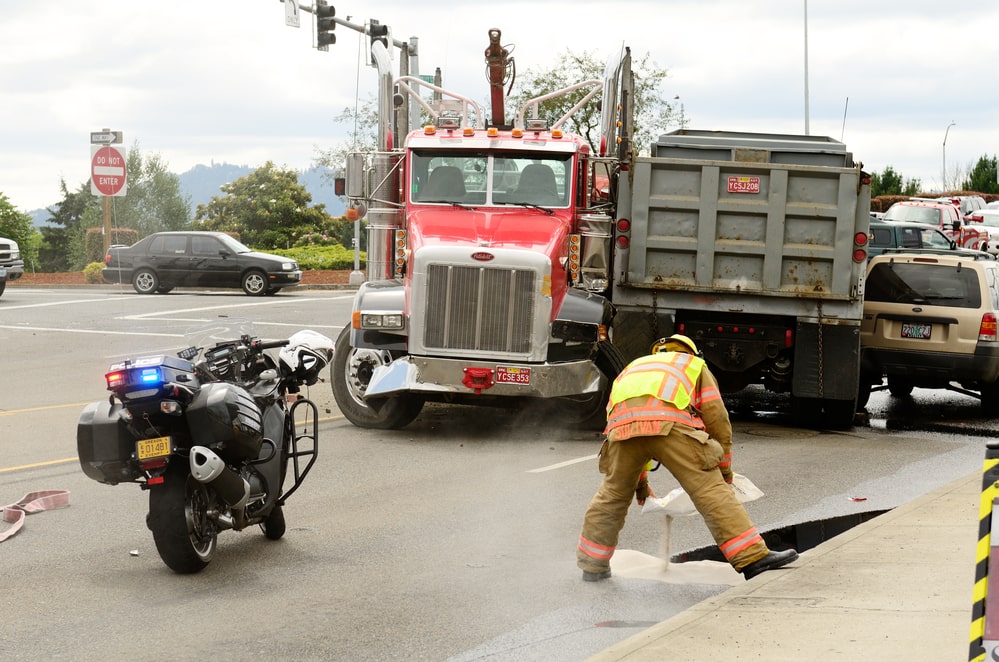
A garbage truck backing down a residential street creates one of the most dangerous blind zones on the road. Federal safety standards exist specifically to address this risk, and understanding what those standards require matters when a backing accident happens.
The Federal Standard Behind Backup Warning Requirements
Under 49 CFR 393.90, commercial motor vehicles must be equipped with functioning brake and turn signal lamps, and many waste collection vehicles are additionally equipped with audible backup alarms and rear facing cameras as part of a carrier’s broader safety compliance obligations.
Why Garbage Trucks Present Larger Blind Zones Than Most Vehicles
The height, width, and rear loading design of a typical garbage truck creates blind zones considerably larger than an ordinary commercial vehicle, particularly directly behind and along both sides near the rear. Children, pedestrians, and parked cars can become invisible to a driver relying on mirrors alone in these zones.
Why A Functioning Backup Camera Makes Such A Difference
A properly functioning backup camera can substantially reduce the risk created by these blind zones, but a broken, obstructed, or improperly maintained camera effectively puts the driver back in the same limited visibility situation the equipment was meant to fix. Maintenance records can reveal whether a known camera problem went unaddressed before a crash.
How Backing Procedures Factor Into A Negligence Claim
Many waste collection companies require a spotter or specific backing procedures when visibility is limited, particularly in residential areas with parked cars, driveways, and children present. Kiefer & Kiefer requests these internal procedures early in every backing accident case it investigates. A driver who skips a required backing procedure, or a company that fails to train and enforce one, can face liability independent of any equipment failure.
Why Employer Liability Often Extends Beyond The Driver
A waste collection company can be held liable not only for its driver’s conduct but also for its own negligence in maintaining safety equipment, training drivers on backing procedures, and enforcing safe practices on residential routes. This creates multiple potential angles of liability beyond the individual driver.
What Evidence Supports A Blind Zone Backing Claim
Because these crashes often turn on maintenance records and internal procedures, gathering specific evidence matters considerably:
- Maintenance records for backup cameras, alarms, and mirrors on the specific truck
- The company’s written backing and spotter procedures, if any exist
- Witness statements describing whether a spotter was used or required
- Records of prior complaints or incidents involving the same vehicle or route
Applying This Framework To A New Orleans Garbage Truck Accident
Because blind zone crashes often depend on equipment maintenance and internal company procedures rather than just the moment of impact, a thorough investigation matters considerably. A New Orleans garbage truck accident lawyer can request maintenance and training records to determine what actually went wrong.
Why These Records Need To Be Requested Quickly
Waste collection companies are not always required to retain maintenance and training records indefinitely, which means requesting this documentation soon after a crash can prevent it from becoming unavailable. A New Orleans garbage truck accident lawyer can help send preservation requests before routine record disposal occurs.
A backing accident that looks like simple driver error at first can often trace back to broken equipment or an unenforced safety procedure. If you or a family member was hurt by a garbage truck in New Orleans, reach out to our office to go over what records may still be available in your case.