

Truck Accident Lawyer
Large commercial vehicles dominate Louisiana’s highways, from I-10 stretching across the state to the bustling port regions of New Orleans and Baton Rouge. When these massive trucks collide with passenger vehicles, the results can be catastrophic, leaving victims facing mounting medical bills, lost wages, and life-altering injuries.
At Kiefer & Kiefer, we represent individuals and families who have been harmed in collisions involving 18-wheelers, delivery trucks, and other commercial vehicles. We recognize the physical, emotional, and financial toll these accidents take on victims and their loved ones, and we’re committed to fighting for the compensation they deserve.
Truck Accident Lawyer Louisiana
Truck crashes differ substantially from typical automobile accidents due to the massive size and weight disparity between commercial trucks and passenger cars. A fully loaded semi-truck can weigh up to 80,000 pounds, while the average car weighs approximately 4,000 pounds. This difference creates collision forces that frequently result in severe injuries or fatalities.
These incidents often involve multiple liable parties, including the truck driver, trucking company, vehicle maintenance contractors, cargo loaders, and truck manufacturers. Federal regulations govern the trucking industry through the Federal Motor Carrier Safety Administration, which sets standards for driver qualifications, hours of service, vehicle maintenance, and cargo securement. Violations of these regulations frequently contribute to crashes.
Common causes include driver fatigue from exceeding hours-of-service limits, distracted driving, inadequate training, improper vehicle maintenance, overloaded or improperly secured cargo, and aggressive driving behaviors. The investigation process requires obtaining electronic logging device data, maintenance records, driver qualification files, and black box information from the truck itself. Insurance companies representing trucking firms typically deploy teams immediately after crashes to gather evidence favorable to their interests, making prompt legal representation vital for protecting your rights.
Experience Matters For Truck Accident Cases
We bring extensive experience handling complex collision cases involving commercial vehicles. Our firm has recovered substantial compensation for clients throughout Louisiana, and we approach each case with thorough preparation and aggressive advocacy.
- Successfully represented clients in cases involving catastrophic injuries, including spinal cord damage, traumatic brain injuries, and multiple fractures
- Recovered millions of dollars in settlements and verdicts for families affected by commercial vehicle crashes
- Built a reputation for meticulous case preparation that encourages favorable settlement negotiations
- Maintained strong relationships with accident reconstruction specialists, medical professionals, and vocational rehabilitation consultants who strengthen our clients’ cases
We handle all aspects of your claim while you focus on recovery. Our team investigates the crash scene, obtains crucial evidence before it disappears, communicates with insurance adjusters, and builds a comprehensive case documenting your damages. We work on a contingency fee basis, which means you pay nothing unless we recover compensation for you.
Types Of Truck Accident Cases We Handle
The commercial trucking industry operates under strict federal and state regulations, yet violations occur regularly. When trucking companies or their drivers cut corners to meet delivery deadlines or maximize profits, innocent people pay the price. We represent clients injured in various types of Louisiana truck accident cases, each presenting distinct legal challenges and requiring specific investigative approaches.
- Trailer Swing Collisions — When a truck’s trailer swings out to form a 90-degree angle with the cab, it often blocks multiple lanes of traffic and causes multi-vehicle pileups. These incidents typically result from sudden braking, improper speed for road conditions, or equipment failure.
- Loss of Control Crashes — Jackknifing frequently occurs when drivers brake too hard on wet or icy roads, causing the trailer to lose traction and swing outward. We investigate whether driver error, inadequate training, or poor vehicle maintenance contributed to the loss of control.
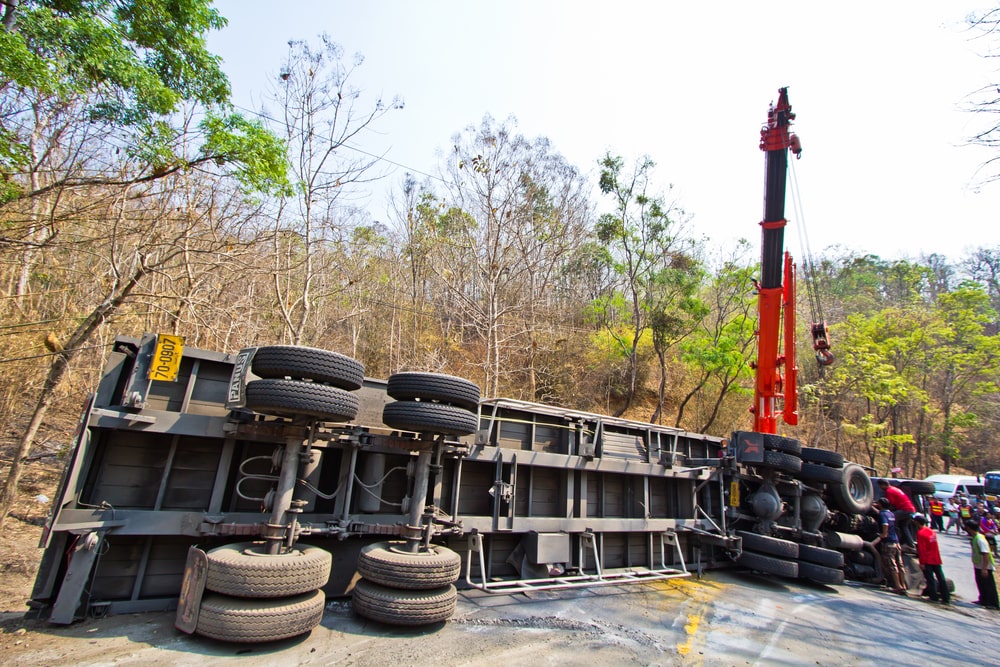
- High Center of Gravity Accidents — Commercial trucks carry elevated loads that make them susceptible to tipping, particularly on curves or during evasive maneuvers. We examine whether improper cargo loading, excessive speed, or sharp turning caused the rollover.
- Cargo Shift Incidents — When freight isn’t properly secured or distributed, it can shift during transport and destabilize the entire vehicle. Our investigations determine whether cargo loaders, trucking companies, or other parties failed to follow proper securement protocols.
- Following Distance Violations — Trucks require significantly more stopping distance than passenger vehicles, yet drivers often tailgate or fail to adjust for traffic conditions. We review electronic logging data and witness statements to establish fault.
- Brake System Failures — Commercial vehicles depend on properly maintained braking systems, and mechanical failures can make stopping impossible. Our cases often involve maintenance records showing neglected inspections or delayed repairs.
- Right Turn Squeeze Accidents — Large trucks need substantial space to complete turns, and drivers sometimes fail to check blind spots before swinging wide. Pedestrians, motorcyclists, and passenger vehicles frequently get caught in these dangerous maneuvers.
- Improper Lane Usage — Drivers who don’t use appropriate lanes for turning or who cut corners too sharply create hazards for surrounding traffic. We gather traffic camera footage and accident reconstruction data to prove liability.
- Passenger Vehicle Underride — When cars slide beneath truck trailers during collisions, the results are often fatal due to the trailer’s height. We pursue claims against trucking companies and manufacturers when inadequate underride guards contribute to injuries.
- Truck Override Crashes — Trucks that ride up over passenger vehicles in rear-end collisions create catastrophic crushing forces. These cases often involve distracted driving, brake failures, or driver fatigue.
- No-Zone Accidents — Commercial trucks have substantial blind spots on all four sides where drivers cannot see other vehicles. We prove liability when truckers change lanes or merge without properly checking these areas.
- Mirror and Camera System Failures — Modern trucks should have functioning mirrors and camera systems to minimize blind spots. Our investigations reveal whether equipment failures or inadequate maintenance contributed to the crash.
If you’ve been injured in any type of commercial vehicle collision, we’re ready to fight for the compensation you deserve. Contact us today to discuss your case and learn how we can help you hold negligent parties accountable for your injuries, medical bills, lost wages, and pain and suffering.
Liability Issues Unique To Commercial Trucks
Commercial vehicle collisions present liability questions that rarely arise in standard car accidents. Federal regulations create duties and responsibilities that don’t apply to regular drivers, and violations of these rules establish negligence in Louisiana truck accident cases. The Federal Motor Carrier Safety Administration mandates specific driver qualifications, including commercial driver’s licenses, medical certifications, and regular drug testing. When companies hire drivers who don’t meet these standards, they accept liability for resulting crashes.
Vicarious liability principles hold trucking companies responsible for their employees’ actions during work hours, but determining employment status isn’t always straightforward. Many companies classify drivers as independent contractors to avoid liability, yet courts often find these arrangements create employer-employee relationships based on the level of control companies exercise. We investigate contracts, dispatch practices, and operational control to establish corporate responsibility.
Negligent Entrustment Claims
- Companies that allow unqualified or dangerous drivers to operate their vehicles bear responsibility for crashes those drivers cause
- If a company knows or should know that a driver has a history of violations, accidents, or substance abuse issues, it faces liability
- We obtain drivers’ employment files, driving records, and previous accident histories to prove companies ignored red flags
Cargo liability presents another unique issue. Federal regulations require proper loading, weight distribution, and securement, but multiple parties may handle cargo before it reaches its destination. Shippers, loading companies, and carriers can all share liability when improper cargo handling contributes to crashes. We trace the entire chain of custody to identify every party whose negligence contributed to the collision.
Insurance Coverage Specifics
Commercial trucking insurance differs substantially from personal auto coverage in both structure and limits. Federal law requires minimum liability coverage of $750,000 for trucks hauling non-hazardous freight, though many companies carry $1 million or more. Trucks transporting hazardous materials must carry at least $5 million in coverage. These higher limits reflect the catastrophic damages these collisions typically cause.
Multiple Policy Layers
- The trucking company carries primary liability coverage for bodily injury and property damage
- Additional policies may cover cargo damage, trailer liability, and physical damage to the truck itself
- Excess coverage kicks in when primary limits are exhausted
- Owner-operators typically maintain their own policies separate from companies they contract with
Insurance companies handling commercial claims employ experienced adjusters and attorneys who begin investigating immediately after crashes occur. They gather evidence, interview witnesses, and build defenses before injured victims even leave hospitals. These teams work to minimize payouts through various tactics, including disputing liability, questioning injury severity, and offering quick settlements that fall far short of fair compensation.
Umbrella and excess policies provide additional coverage beyond primary limits, but accessing these funds often requires proving that primary coverage has been exhausted. Some policies contain exclusions for specific circumstances, such as drivers operating outside their authorized areas or hauling unauthorized cargo.
Maximizing Your Recovery
- We review policy language carefully to overcome insurance companies’ attempts to deny coverage based on technical exclusions
- Strategic settlement structuring triggers all available coverage layers
- We identify all insurance sources, including policies you may not know exist
If you’ve been injured in a commercial vehicle collision, contact Kiefer & Kiefer today to discuss how we can help you recover full compensation from all available insurance sources.
Common Causes Of Truck Accidents
A split-second decision behind the wheel of an 80,000-pound vehicle can change lives forever. Commercial vehicle crashes don’t happen by chance—they result from identifiable factors that, in many cases, could have been prevented. At Kiefer & Kiefer, we’ve investigated countless collisions involving big rigs, and we’ve seen recurring patterns that point to negligence by drivers, trucking companies, and other parties. Recognizing these common causes helps us build stronger cases for our clients.
Driver Fatigue
Truckers face intense pressure to meet delivery schedules, often leading them to drive while exhausted. Federal hours-of-service regulations limit how long drivers can operate without rest, yet violations occur frequently. Fatigue impairs reaction time, decision-making, and alertness as severely as alcohol intoxication. We obtain electronic logging device records to prove when drivers exceeded legal limits or falsified their logbooks.
Distracted Driving
Texting, eating, adjusting GPS systems, and other distractions pull drivers’ attention from the road. Commercial drivers spend long hours alone in their cabs, increasing the temptation to use phones or engage in other distracting behaviors. Even a few seconds of inattention at highway speeds means a truck travels the length of a football field without the driver watching the road. Cell phone records and cab camera footage often reveal the truth about what drivers were doing before crashes occurred.
Improper Maintenance
Trucking companies must maintain their fleets according to strict federal standards, but some cut corners to save money. Worn brakes, bald tires, defective lighting systems, and other mechanical failures can make crashes inevitable. We review maintenance logs, inspection reports, and repair records to identify whether companies neglected their responsibilities. Parts that should have been replaced, inspections that should have happened, and repairs that were delayed all contribute to our clients’ cases.
Inadequate Training
Not all trucking companies properly train their drivers on safe operation, defensive driving techniques, or how to handle challenging road conditions. New drivers sometimes receive minimal instruction before being sent out with heavy loads. We investigate driver qualification files, training records, and employment histories to determine whether companies put inadequately prepared drivers on the road.
Overloaded or Improperly Secured Cargo
Federal regulations limit truck weights and require proper cargo securement, but violations happen regularly. Overloaded trucks take longer to stop, put excessive stress on braking systems, and become harder to control. Improperly secured cargo can shift during transport, destabilizing the vehicle or spilling onto roadways. We work with cargo loading records, weigh station data, and accident reconstruction specialists to prove when weight or securement violations contributed to crashes.
Speeding and Aggressive Driving
Delivery deadlines create incentives for drivers to speed, tailgate, make unsafe lane changes, or drive aggressively. Commercial vehicles need significantly more time and distance to stop than passenger cars, making speed particularly dangerous. Black box data from trucks reveals actual speeds and driving behaviors in the moments before collisions, providing objective evidence of recklessness.
Impaired Driving
Although commercial drivers face stricter blood alcohol limits than other motorists, some still drive under the influence of alcohol or drugs. Prescription medications, illegal substances, and even over-the-counter drugs can impair driving ability. We obtain toxicology reports, medical records, and witness statements to prove when impairment played a role in crashes.
If you’ve been injured in a commercial vehicle collision caused by any of these factors, we’re ready to investigate your case and pursue the compensation you deserve. Contact us today to discuss how we can help hold negligent parties accountable for your injuries and losses.
Louisiana Truck Accident FAQ
Victims of commercial vehicle collisions face a mountain of questions during an already overwhelming time. The legal process involves unfamiliar terminology, complex regulations, and high-stakes negotiations with powerful insurance companies. At Kiefer & Kiefer, we’ve helped countless Louisiana families recover from devastating crashes involving big rigs, and we’ve answered thousands of questions along the way. Below, we address some of the most common concerns our clients bring to us.
Who Can Be Held Liable After A Commercial Vehicle Collision?
Multiple parties often share responsibility for these crashes. The truck driver bears liability for negligent actions like speeding, distracted driving, or violations of hours-of-service regulations. The trucking company can be held accountable for inadequate driver training, forcing unrealistic delivery schedules, or failing to maintain vehicles properly. Cargo loading companies may be liable if improper securement or overloading contributed to the crash. Vehicle manufacturers face responsibility when defective parts cause accidents. Maintenance contractors can be sued if their negligent repairs led to mechanical failures. We investigate all potentially liable parties to maximize your recovery.
What Damages Can I Recover In A Louisiana Truck Accident Case?
Compensation covers both economic and non-economic losses. Medical expenses include emergency care, hospitalization, surgeries, rehabilitation, prescription medications, and future medical needs. Lost wages account for time missed from work during recovery, while lost earning capacity addresses permanent disabilities that affect your ability to work. Property damage covers vehicle repairs or replacement. Pain and suffering compensation addresses physical discomfort, emotional distress, and reduced quality of life. In cases involving gross negligence or intentional misconduct, punitive damages may be available to punish wrongdoers and deter similar behavior.
Why Do Commercial Vehicle Crashes Differ From Regular Car Accidents?
These collisions involve federal regulations that don’t apply to passenger vehicles. The Federal Motor Carrier Safety Administration sets strict standards for driver qualifications, vehicle maintenance, cargo securement, and hours of service. Trucking companies must maintain detailed records that become crucial evidence in litigation. The severity of injuries tends to be much greater due to size and weight differences between trucks and cars. Multiple insurance policies often apply, including the trucking company’s liability coverage and cargo insurance. Corporate defendants typically have experienced legal teams that deploy immediately after crashes to protect their interests.
How Long Do I Have To File A Legal Claim?
Louisiana law imposes a one-year statute of limitations for most personal injury claims arising from vehicle collisions. This deadline begins on the date of the crash, and missing it typically means losing your right to compensation permanently. Some exceptions exist for cases involving government entities or when injuries weren’t immediately discoverable, but these are rare. We recommend contacting an attorney as soon as possible after a crash because evidence deteriorates quickly, witnesses’ memories fade, and trucking companies often destroy records after legally required retention periods expire.
What Does Evidence Strengthens Commercial Vehicle Collision Cases?
Electronic logging device data shows whether drivers violated hours-of-service regulations before crashes. Black box information from trucks reveals speed, braking, and other driving behaviors. Maintenance records demonstrate whether companies properly serviced their vehicles. Driver qualification files show training history and previous violations. Cargo loading documents prove whether weight limits were exceeded or securement was inadequate. Witness statements provide independent accounts of how crashes occurred. Accident reconstruction analysis establishes fault and demonstrates crash dynamics. Medical records document the full extent of injuries and necessary treatment. We work quickly to preserve this evidence before it disappears.
Contact Kiefer & Kiefer Today!
If you or someone you love has been injured in a collision with a commercial truck, contact us today for a free consultation. We’ll review your case, explain your legal options, and fight to secure the compensation you deserve for medical bills, lost income, pain and suffering, and other damages. Time limits apply to filing claims, so reach out now to protect your rights.

Free Consultation
Client Review
"Megan and her team are the absolute best. They are patient, professional and thorough. I have no doubt that my getting back to myself after the car accident was their priority. Megan encouraged me to stay the course, work through my treatments, trust my doctors and let her handle the rest. That’s exactly what I did and she DID NOT let me down. I, without a doubt would refer her to my family and friends."
Kelly Ellis