






Were you injured in a motorcycle accident in New Orleans, LA?
At Kiefer & Kiefer, we are plaintiff-focused motorcycle accident lawyers preparing every case with experience and dedication.
If a driver caused your motorcycle crash, an attorney can pursue the compensation Louisiana law allows for the injuries you sustained. Riders carry no structural protection, so the same collision that dents a bumper can end a career. Our firm has handled these claims in Orleans Parish for more than four decades.
A New Orleans, LA motorcycle accident lawyer at Kiefer & Kiefer investigates the crash independently, counters the assumptions adjusters bring to rider claims, and documents the full extent of your injuries. Our fee is contingent and the consultation costs nothing. Reach our office when you are ready to talk.
Motorcycle Accident Lawyer New Orleans, LA
Ninety-seven motorcyclists died on Louisiana roads in 2023, and riders were involved in 1,229 injury crashes statewide, according to the Louisiana Highway Safety Commission. New Orleans adds hazards most of the state does not have. Streetcar rails, uneven pavement, and narrow one-way streets all punish a two-wheeled vehicle in ways they never punish a car.
A motorcycle accident claim is a civil demand against the driver whose negligence caused the collision. It requires proof of duty, breach, causation, and damages, the same as any injury case. What differs is the fight over rider conduct, which begins the moment the adjuster opens the file. A motorcycle accident attorney in New Orleans builds the record that answers it.

Types of Motorcycle Accident Cases We Handle in New Orleans
Most motorcycle crashes trace to a driver who never saw the rider or misjudged the closing distance. The specific failure shapes the proof we need and the defense we should expect.
- Left-turn collisions. A driver turning across your lane is the most common serious motorcycle crash. Fault usually rests with the turning motorist, though insurers routinely argue the rider was speeding. Sight line photographs taken from the driver’s position often settle that dispute.
- Lane change and blind spot crashes. Drivers merge into riders they never checked for. Mirror position, vehicle damage patterns, and roadway markings establish what happened. The driver’s account rarely matches the physical evidence in these cases.
- Rear-end collisions. Riders struck from behind absorb the impact with no crumple zone. Injuries are frequently far worse than the visible damage to either vehicle suggests, which is the argument the carrier will make against you.
- Head-on collisions. Centerline crossings leave riders with catastrophic harm. We identify every policy layer, including employer and umbrella coverage, before valuing the claim.
- Road hazard and pavement crashes. Potholes, utility cuts, and raised streetcar rails can put a rider down without any other vehicle involved. These claims turn on who maintained the roadway and what they knew about the defect beforehand.
- Dooring accidents. A door opened into traffic gives a rider no time to react. Occupants of parked vehicles owe a duty to look before opening, and the resulting injuries are often severe despite the low speeds involved.
- Hit-and-run crashes. When the driver flees, uninsured motorist coverage becomes the recovery source. Prompt notice to your own carrier is required, and your insurer will investigate the claim the way a liability carrier would.
- Uninsured and underinsured motorist claims. Minimum limits rarely cover a serious rider injury. Identifying and stacking every applicable layer of coverage is often the entire case.
- Truck accidents. A collision between a motorcycle and a commercial vehicle almost always produces severe injuries. Carriers dispatch investigators within hours, and we move accordingly. Our attorneys spent years defending trucking companies before taking the plaintiff side.
- Wrongful death claims. Fatal rider crashes require us to understand the person and the family left behind. We ask for the photographs, the videos, and the family stories before drafting anything.
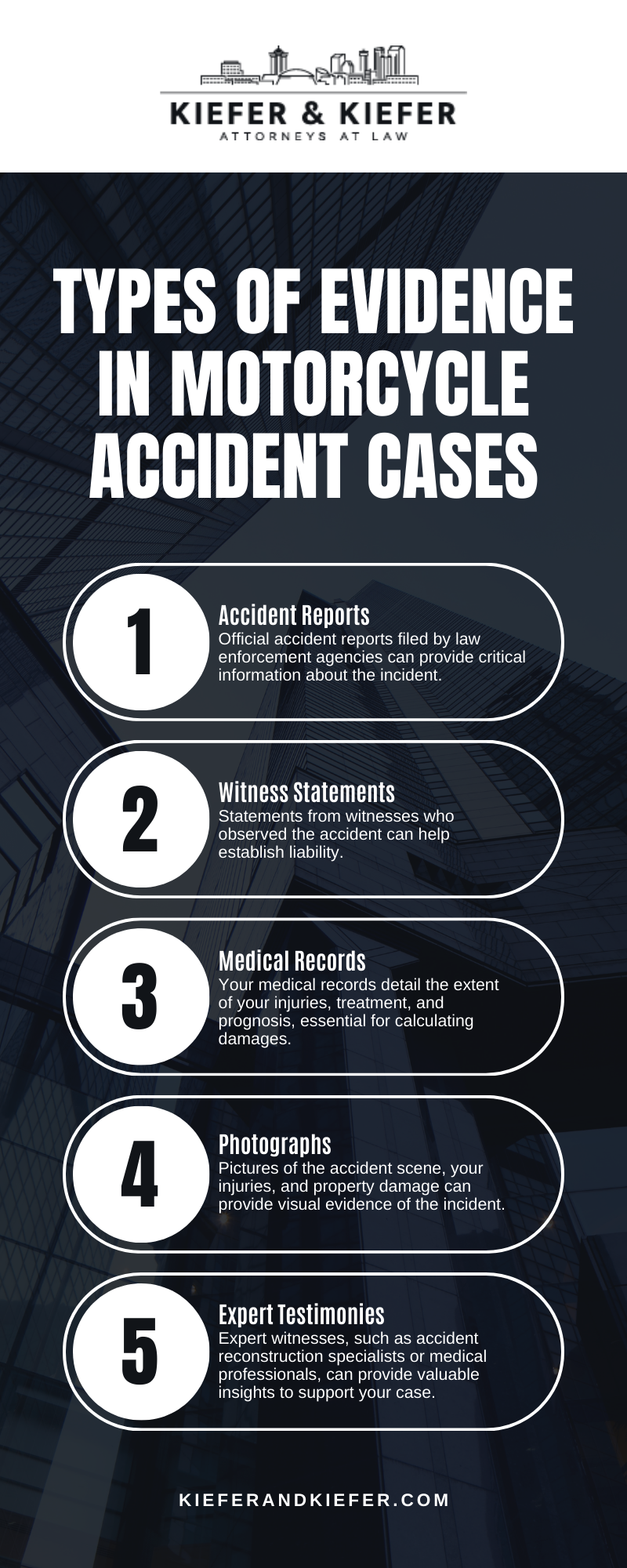
Motorcycle Accident Infographic
Why Choose Kiefer & Kiefer as my Motorcycle Accident Lawyer in New Orleans, LA?
Trial Preparation That Anticipates the Rider Defense
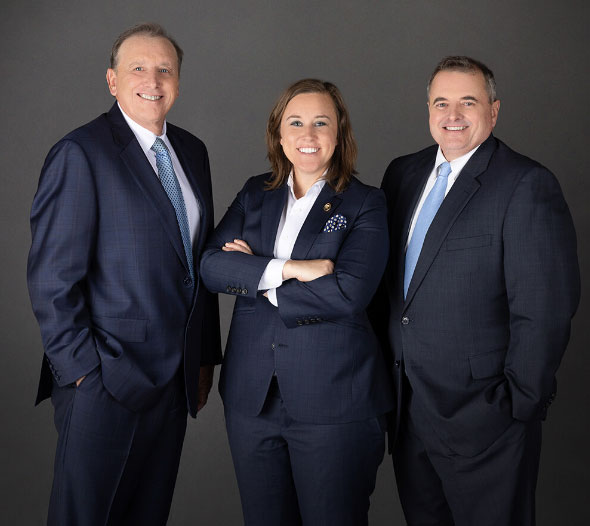
Chris Short graduated magna cum laude from Tulane and practices in Louisiana and Florida. Megan Kiefer belongs to the Multi-Million Dollar Advocates Forum, earned her law degree from Tulane University Law School in 2009, and teaches trial advocacy there. Both prepare motorcycle claims for trial rather than for a settlement conference, which changes what gets documented, when it gets documented, and how the file reads to an adjuster. If you need a personal injury lawyer in New Orleans, LA, our firm has the experience to help.
Results in Serious Vehicle Claims
Kiefer & Kiefer has recovered millions of dollars for injured clients. Representative outcomes include:
- $2.3 million for a work-related vehicle crash requiring neck and back surgeries
- $1.3 million for a collision with an 18-wheeler involving multiple surgeries and disc herniations
- $865,948 at trial for an aggravated back condition treated with nerve ablation
- $650,000 for a rear-end collision
We represent injured people and their families only, never drivers, companies, or insurers. Consultations are free, and our fee is owed only if we obtain a recovery for you.
Understanding Motorcycle Accident Cases
Damages, Liability, and Compensation for Motorcycle Accident Cases
Civil Code Article 2315 obligates a person whose fault causes damage to repair it. Rider claims reach further than most vehicle claims because the injuries run deeper:
- Emergency surgery, orthopedic repair, and long-term rehabilitation
- Wages lost and earning capacity permanently reduced
- Pain, mental anguish, and loss of enjoyment of life
- Paralysis and other permanent impairment
- Burn injuries from road contact or contact with hot components
- Loss of consortium belonging to a spouse or child
The common injuries in these crashes are the ones that cost the most to treat. Fault gets apportioned among everyone who contributed. Under Article 2323, amended effective January 1, 2026, a claimant assigned 51 percent or more of the fault recovers nothing, and anyone below that line has the award cut by their share. That threshold matters more for riders than anyone, because shifting fault onto the rider is the standard defense. Crashes before that date remain under Louisiana’s former pure comparative fault rule.
What Are Important Aspects of a Motorcycle Accident Case?
Rider claims differ from car accidents in ways that show up early in the file. Several things carry disproportionate weight:
- Scene photographs showing sight lines and the roadway surface
- Helmet, gear, and motorcycle preserved rather than repaired or discarded
- Treatment begun immediately and continued without gaps
- Independent witness accounts, since driver statements favor the driver
- Every available policy identified, including your own coverage
The mistakes riders make usually involve giving a recorded statement or repairing the bike before anyone has examined it. NHTSA speeding data attributes 29 percent of 2024 traffic fatalities to speed, which insurers cite against riders regardless of what the evidence shows.
What Is The Motorcycle Accident Case Timeline?
Severity drives the schedule. Article 3493.1 permits two years from the date of injury to file suit on causes of action arising on or after July 1, 2024. Earlier claims carried one year.
- Scene investigation, evidence preservation, and coverage identification
- Treatment continuing until the medical condition stabilizes
- Demand delivered to each carrier with exposure
- Suit filed where liability is contested or negotiation stalls
- Discovery, depositions, and consulting opinions
- Mediation, settlement, or trial
The damages in motorcycle cases cannot be valued until treating physicians can describe what future care will require.
What Should You Bring to Your Motorcycle Accident Consultation?
Anything you still have shortens the investigation, though we can obtain most records ourselves.
- The crash report or the agency and report number
- Photographs of the motorcycle, the roadway, and your injuries
- Your declarations page showing liability and uninsured motorist limits
- Medical bills and the names of your treating providers
- Anything an adjuster has sent you in writing
The review is free. We will explain what the coverage realistically supports and which settlement factors are likely to govern your claim.
Most Dangerous Locations for Motorcycle Accidents in New Orleans
Rider risk in this city concentrates where pavement condition, rail crossings, and heavy turning traffic overlap.
Surface streets:
- Canal Street, where streetcar rails run the length of the roadway
- South Claiborne Avenue, wide and heavily trafficked with frequent turns
- St. Charles Avenue, combining rails, uneven pavement, and parked vehicles
- Tchoupitoulas Street, carrying commercial traffic along the riverfront
- Elysian Fields Avenue, a long corridor with repeated signalized crossings
Highways and expressways:
- Interstate 10, including the High Rise approach
- Interstate 610, the bypass route with high merge speeds
- The Pontchartrain Expressway, funneling traffic toward the bridge
- The Crescent City Connection, exposed and frequently congested
- Chef Menteur Highway, a long stretch with limited lighting
Reach Out to Kiefer & Kiefer to Schedule a Consultation
A motorcycle accident attorney in New Orleans can review your claim at no cost. We charge no fee unless we recover for you, and a consultation commits you to nothing. We will tell you honestly whether the claim is worth pursuing and what the obstacles look like. Contact us to arrange a case review with a motorcycle accident lawyer in New Orleans.
Free Consultation
Client Review
"Megan and her team are the absolute best. They are patient, professional and thorough. I have no doubt that my getting back to myself after the car accident was their priority. Megan encouraged me to stay the course, work through my treatments, trust my doctors and let her handle the rest. That’s exactly what I did and she DID NOT let me down. I, without a doubt would refer her to my family and friends."
Kelly Ellis